Why does one hair color stay beautiful for weeks while another quickly loses its shine? Discover 5 factors that influence color longevity — from pigment quality to choosing the right developer.
Why Does Hair Color Fade? 5 Factors That Affect Color Longevity
A cool blonde can maintain the same level of lightness and still look different after a few weeks. Copper can lose intensity before it becomes noticeably lighter. Brown can appear less deep, while part of that change may come from a loss of shine.
So color fading involves more than just the loss of pigment. Saturation, the balance between reflections and the way the hair reflects light can all change over time.
1. Color formulation and longevity
The shade visible on the hair is created by a specific combination of coloring agents. In oxidative color, their performance also depends on pH, concentrations and the cosmetic base of the formula.
That means similar ingredients in two hair colors do not necessarily produce identical behavior. Differences in proportions and formulation can affect both the initial result and how the color develops over time.
Initial intensity and longevity are two different characteristics. A highly saturated result immediately after the service does not automatically tell us how long a specific tone will remain stable.
2. Developer and the conditions in which color develops
Developer participates in the color-forming process and works together with the full color formula. The properties of the final mixture depend on both products and the ratio in which they are combined.
The pH of the mixture can also influence shade development. A stronger developer does not automatically mean better longevity, and the same peroxide strength can behave differently across different color lines.
3. Strong saturation does not always mean strong color retention
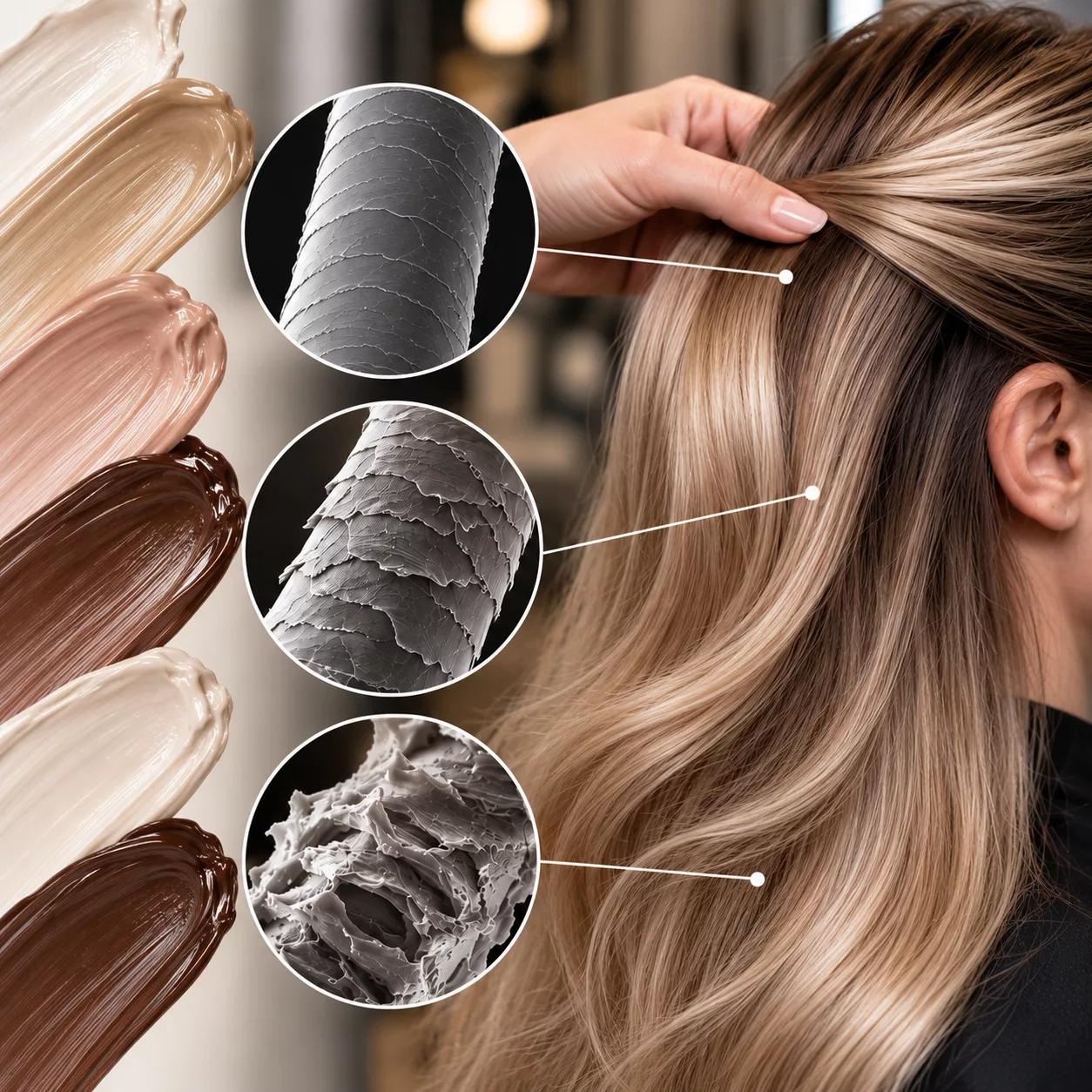
Porous, sensitized hair can take on an intense shade quickly while losing it faster during subsequent washes. Color uptake and color retention are not the same process.
This is one reason why an initially even result may later reveal differences between sections of the hair. Natural regrowth, previously colored lengths and lightened ends all have a different history and may react differently to the same product.
4. The same level, a different color character
A change in tone can become visible before there is any obvious loss of depth. A cool blonde may remain at the same level but appear warmer as the neutralizing tone fades. Copper can stay at the same level while losing some of its saturation.
So longevity is not only about how much color remains, but also about the balance between different color components and the shine of the hair.
5. Water, light and metals — less obvious factors
When discussing color fading, attention often focuses on shampoo. But water, light, high heat, chlorinated water and the condition of the hair also play a role.
Light exposure and washing can work together to accelerate fading. Trace amounts of metals may also influence oxidative reactions and the way color behaves afterwards.
Metals can also affect the tone itself, for example by creating a greenish cast linked to copper deposits.
Les Fleurs D’O in professional hair color
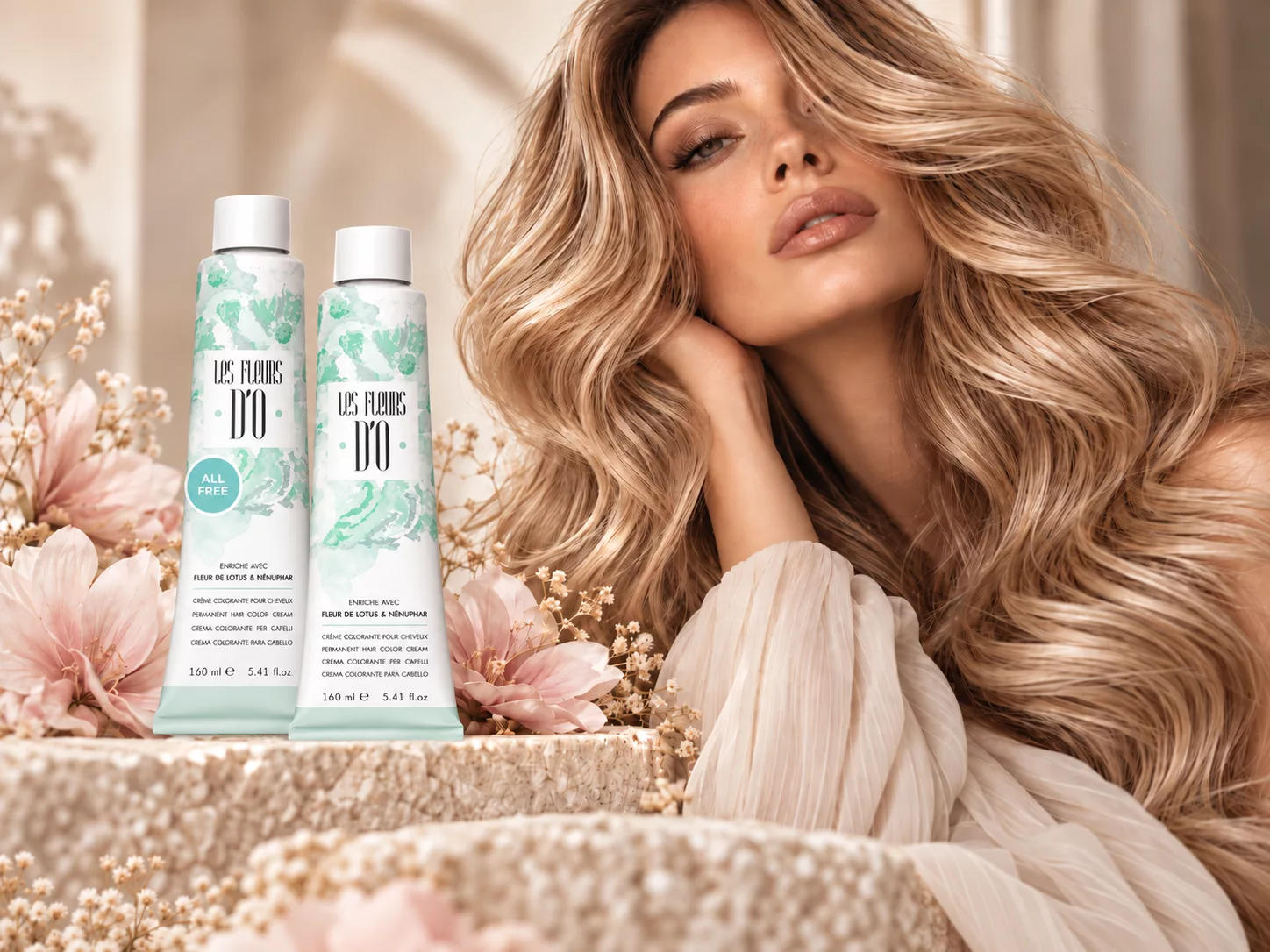
Different coloring goals are reflected in the Les Fleurs D’O range. Alongside classic oxidative color, the portfolio includes Rapide 10’, Blond Pure Specialist toners and Direct Color — direct color used without developer.
The range is completed by developers in different strengths and after-color haircare products.